

Emerging Educational Technologies for Science Technology Engineering Mathematics
Educational technologies offer enormous potential to enhance teaching and learning in STEM education. The Elite Graduate Program “Emerging Educational Technologies for Science Technology Engineering Mathematics” (EET4STEM) combines the necessary subject-specific educational competencies with content-specific and computer science competencies. It equips outstanding students at the intersection of STEM education and computer science to develop educational innovations, evaluate their effectiveness, and implement them in practice. The program can be completed as either a master’s degree or a certificate program.
| Type of degree | Master of Science and/or certificate |
| Duration of Study | Master of Science: Four semesters |
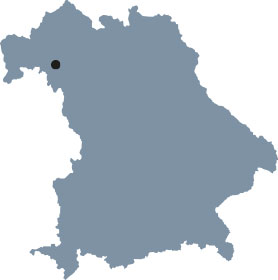
| University | Julius-Maximilians-Universität Würzburg |
| Entrance criteria | Certificate program: at least 75 ECTS in a STEM teacher education program or a computer science-related program at JMU Master’s program: Bachelor’s degree in a teacher education program for high schools that includes a STEM subject or in a computer science-related program |
| Course language | German, English |
| Application deadline | Certificate program: 15 March, 15 September Master’s program: 15 September |
| Start of course | Certificate program: winter and summer semester Master’s program: winter semester |
| Supervisor | Prof. Dr. Thomas Trefzger |
| Organization | Dr. Brenda Pfenning Contact the coordinator |
| Further information | Website EET4STEM |
Combining Technology and Subject-Specific Education
The Elite Graduate Program “EET4STEM" offers exceptionally talented students pursuing a teaching degree in STEM subjects for high school, as well as students in computer science-related programs, an excellent education in the development, research and application of educational technologies.
Through interdisciplinary collaboration among relevant institutions at the University of Würzburg, EET4STEM offers a curriculum that uniquely integrates subject-specific educational and educational technology perspectives. Foundational modules from both areas lay the groundwork for shared ways of thinking and working among students. Specialization options provide in-depth knowledge of cutting-edge technologies in the education sector, such as artificial intelligence and augmented reality. In the development lab, students work in interdisciplinary teams to implement modern educational technologies – from idea development and subject-specific instructional design to technical implementation and evaluation. By learning from and with one another, they acquire the skills to design intelligent learning systems, personalized educational offerings, and immersive learning environments. At the same time, they strengthen key competencies such as project management and teamwork.
The Elite Graduate Program “EET4STEM” broadens the perspectives and career opportunities of students in STEM teacher education and computer science. It optimally prepares them for the digital challenges in the school system, in application development, or in research. Graduates are distinguished by a knowledge advantage that meets the current needs in the field of educational digitization.


By combining computer science and STEM education at the highest academic level, the program enables outstanding students to rethink digital learning technologies, evaluate their effectiveness through research and integrate them into educational practice.
Prof. Dr. Thomas Trefzger